Category Archives: Bookkeeping

Touré Roberts

book balance

The company’s book balance will be less than the bank balance up to that point since the checks haven’t been delivered to the payor’s bank for payment to the payee and deposited into the payee’s bank. For instance, if a business issued multiple checks, those sums would be shown in the book balance and would be compared to the cash balance in the bank account at the conclusion of the accounting period. It includes various processes and methods which would help in representing the correct and actual figures to the creditors or stockholders of a company. Book balance shows the fundings a business has after making adjustments for unprocessed checks, deposits in transit, or other transactions book balance that have to be reconciled through the bank account. Book balance is a business’s cash balance based on its records in accounting.

  • Moreover, regular reconciliation helps in identifying patterns and trends in cash flow.
  • Bank service charges which are often shown on the last day of the bank statement.
  • Accounts receivable is the money a business is owed for the goods and services it has rendered on credit.
  • Standard section data are selected based on accounts and are grouped by accounts.
  • The bank balance is a business’s cash position in a business’s bank account, according to a report made at the end of the month based on bank statements.

Founded in 2002, our company has been a trusted resource for readers seeking informative and engaging content. We follow a strict editorial policy, ensuring that our content is authored by highly qualified professionals and edited by subject matter experts. This guarantees that everything we publish is objective, accurate, and trustworthy.

  • To reconcile a company’s financial records and book balance with the banking activity for an accounting period, a bank reconciliation statement can be created.
  • Suppose, in Alice’s situation, she can also observe any swings in her business.
  • Using the cash balance shown on the bank statement, add back any deposits in transit.
  • There may also be timing differences that do not require journal entries, such as deposits in transit and uncashed checks.
  • You’ll walk away from each illuminating chapter with powerful principles, tools and prompts for self-evaluation.
  • A daily reconciliation is used to maintain a highly accurate book balance, as well as to detect fraudulent transactions as early as possible.

On rare occasions, the bank will have made an error instead, in which case the bank corrects its records and the company’s book balance is not adjusted. The amount of interest earned is recorded in the bank statement, and must be added to the company’s book balance. If the cash book’s balance still differs from the one shown on the bank statement, the difference must be due to the entries present in the cash book but missing from the bank statement. At the end of each month, the cash book is not balanced until a bank statement is received from the bank.

Everything to Run Your Business

book balance

This figure includes all transactions that have been entered into the accounting system, such as checks written, deposits made, and any other financial activities. It represents the company’s internal view of its financial status at any given time. The bank balance is the balance reported by the bank on a firm’s bank account at the end of the month.

How you Can Balance the Books?

The book balance consist of all transactions that a company does within an accounting cycle, such as a fiscal or quarter year. Balancing the books may sound daunting and exhausting task, but it is highly crucial for larger or small businesses. A deposit is typically made, the depositor is given access to the money, and the check clears before the paying bank is charged.

The money for the interest may come from a savings account or a cash sweep, in which case the bank puts idle cash from a business’s checking account into short-term securities. A company’s bank account may have had account service fees debited out of it during the month and at the end. Until the month-end figures are reconciled with the bank, the debits would not be reflected in the book balance.

In practice, the balance in the cash book rarely agrees with the balance in the bank statement. Each summary row is calculated either through a sum of child row amounts or through a specified formula. For example, when a company receives a checking account statement from its bank at the end of October, the $3,000 ending balance on the statement is its bank balance. Let’s say Company X sends Company Y a check on August 25.The debit would not show up on the month-end bank statement if Company X did not deposit it by the end of August. As a result, even if those funds have been used, X’s bank account would show that they are still available. As a result, Company ABC must keep track of its pending debits and credits to manage its cash flow activities to ensure it has enough funds to operate.

These deposits are called deposits in transit and cause the bank statement balance to understate the company’s actual cash balance. Since deposits in transit have already been recorded in the company’s books as cash receipts, they must be added to the bank statement balance. The balance on June 30 in the company’s general ledger account entitled Checking Account is the book balance that pertains to the bank account being reconciled. (For an individual, the book balance is likely to be the balance appearing in the person’s check register.) It is common for the book balance to not agree with the balance on the bank statement as of the same day.

This includes verifying deposits, withdrawals, and any other financial activities. It’s important to ensure that each transaction is accurately recorded in both the bank’s records and the company’s accounting system. Compare the cash account’s general ledger to the bank statement to spot the errors. One is making a note in your cash book , and the other is to prepare a bank reconciliation statement . Decide how frequently you’ll reconcile, then stick to it.You can’t directly void the checks because they will affect the numbers for the prior year. If an item appears on both, that means that the item was properly recorded and has cleared.


Accounts Payable Journal Entry: Types and Examples

notes payable journal entry

Under this arrangement December’s interest expense will be paid in December, January’s interest expense will be paid in January, etc. You simply record the interest payment and avoid the need for an adjusting entry. Similarly, your insurance company might automatically charge your company’s checking account each month for the insurance expense that applies to just that one month. In conclusion, notes payable are also known as promissory notes, where a borrower promises to repay borrowed money at maturity time.

Summary of Interest Bearing Notes Journal Entries

  • Understanding the concept of Notes Payable is essential for anyone delving into the realm of business studies.
  • Reviewing the financial statements and notes to the financial statements can provide additional information about a company’s notes payables, such as the interest rate, repayment terms, and maturity date.
  • This journal entry of issuing of $10,000 note payable will increase both total assets and total liabilities on the balance sheet by $10,000 as of January 1.
  • If the borrower decides to pay the loan before the due date of the note payable, the computation of interest will not be done for the pre-decided period.
  • The note payable in this journal entry should be classified in the short-term liability section on the balance sheet if its payment term is within 12 months period.
  • In this case, we can make the journal entry for paying the notes payable by debiting the notes payable account and crediting the cash account.
  • The nature of note payable as long-term or short-term liability entirely depends on the terms of payment.

It is a legally written agreement recorded as a liability in the balance sheet, representing an obligation to pay debt for a company. We can make the journal entry for issuing the note payable to borrow the cash by debiting the cash account and crediting the notes payable account. Notes payables are written promissory notes to repay a specified amount to a lender on a predetermined date.

Journal entry for purchasing equipment with note payable

notes payable journal entry

This commitment, based on the borrowing tenure, can be recognised as current liabilities, if to be paid within a year, or non-current liabilities, if the payment period extends beyond a year. Moreover, the interest charged on these notes payable is often a crucial consideration in the financial calculations, affecting a company’s profitability and cash flow. Effectively managing these notes payable is critical to maintain the company’s liquidity, credit standing, and ultimately, its financial stability. We can make the journal entry for interest-bearing note payable by debiting the asset account and crediting the notes payable account on the day that we issue the note. Note payable is the promissory note that we issue to the other party in exchange https://srrennaprovincia.trasparenzarifiuti.it/declining-balance-method-of-depreciation-examples/ for the cash or other assets by promising that we will pay certain amount of money at the certain date stated in the note.

  • Precise accounting for these notes allows companies to capture their liability correctly and serves as an accurate representation of their financial health.
  • A related account is Supplies Expense, which appears on the income statement.
  • On the other hand, it should be classified as a long-term liability if its term is more than 12 months.
  • It is important to consider that the interest amount of promissory notes is recorded as a separate short-term liability.
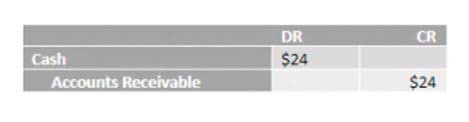
  • The balance in Accounts Receivable also increases if the sale was on credit (as opposed to a cash sale).
  • A record in the general ledger that is used to collect and store similar information.

Recording Short-Term Notes Payable Created by a Loan

These loans provide the necessary capital without straining the company’s cash flow. Installment loans provide borrowed funds for various business needs, such as expansion and equipment purchase. This monthly interest accrual is recorded at the end of each month until the principal is repaid. Amortizing these premiums or discounts over the life of the bond is necessary to align the interest expense reported on the income statement with the actual cost of borrowing. When bonds are issued, they may be sold at a premium or a discount, depending on the relationship between the bond’s coupon rate and the prevailing market interest rate. If ABC Inc. issued the $1,000,000 bonds at a 6% coupon rate, but the market interest rate was 7%, the bonds were sold at a discount for $950,000.

notes payable journal entry

notes payable journal entry

Additionally, the article compares Notes Payable with Accounts Payable, exploring their similarities and differences. You’ll also discover how Notes Payable impacts a company’s financial structure and the correct accounting treatment. Insightful examples of practical usage of Notes Payable in modern business will round out your understanding, showcasing the importance of thorough record-keeping. Some people argue that notes payable can be adjusted under the head of account payables.

  • What distinguishes a note payable from other liabilities is that it is issued as a promissory note.
  • Record the journal entries to recognize the initial borrowings, and the two payments for Mohammed.
  • Furthermore, understanding the implications of accrued interest and the need for consistent amortization methods helps in maintaining the integrity of financial data.
  • To enter accounts payable, you record the invoice or bill received from the vendor by crediting accounts payable and debiting the corresponding expense or liability account in your accounting system.
  • The major difference when looking at notes payable vs accounts payable is that accounts payable doesn’t include a formal written promise, or promissory note.
  • The two examples of adjusting entries have focused on expenses, but adjusting entries also involve revenues.

Payment of notes payable

notes payable journal entry

This blog will help you understand what notes notes payable journal entry payables are, who signs the notes, examples, and accounting treatment for the company’s notes payable. A business borrows money from a bank, and the bank makes the note payable within a year, with interest. For example, this could come from a capital expenditure need or when expenses exceed revenues.

notes payable journal entry

Insurance Expense, Wages Expense, recording transactions Advertising Expense, Interest Expense are expenses matched with the period of time in the heading of the income statement. Under the accrual basis of accounting, the matching is NOT based on the date that the expenses are paid. Interest Payable is a liability account that reports the amount of interest the company owes as of the balance sheet date. Accountants realize that if a company has a balance in Notes Payable, the company should be reporting some amount in Interest Expense and in Interest Payable. The reason is that each day that the company owes money it is incurring interest expense and an obligation to pay the interest.

What is the Carrying Value of a Bond?

carrying value of a bond

Here are some common questions about bond carrying value to help you understand this important concept. On top of that, bonds include various forms, each involving some advantages. The size of the U.S. bond market as of Nov. 2024, according to the Securities Industry and Financial Markets Association (SIFMA), an industry group. Please note that the cost of plant & machinery includes transportation, insurance, installation, and other testing charges necessary to get the asset ready for its use.

carrying value of a bond

Bond valuation takes the present value of each component and adds them together. This calculator streamlines the process for determining the carrying value of bonds, providing essential insights for financial analysis and investment decisions. Publicly traded companies include their current debt obligations on their balance sheets, which you can find in their quarterly filings with the Securities and Exchange Commission (SEC). Bonds, and specifically the carrying value of those bonds, are listed in the liabilities and equity section under long-term debt.

Significance for investors

This method allocates interest expense over the bond’s life based on the market interest rate at the time of issuance. As a result, the carrying value of the bond increases gradually over time, reducing the unamortized bond discount. The carrying value, or book value, is an asset value based on the company’s balance sheet, which takes the cost of the asset and subtracts its depreciation over time. The fair value of an asset is usually determined by the market and agreed upon by a willing buyer and seller, and it can fluctuate often. In other words, the carrying value generally reflects equity, while the fair value reflects the current market price.

#1 – Carrying Value of Asset

Consequently, the carrying value of the bond would be $920 ($1,000 – $80). Carrying value is the originalcost of an asset, less the accumulated amount of any depreciation or amortization, less the accumulated amount of any asset impairments. The concept is only used to denote the remaining amount of an asset recorded in a company’s accounting records – it has nothing to do with the underlying market value (if any) of an asset. This amount will reduce the balance of either the discount or premium on bonds payable.

  • Bond issuers and the specific bond instruments they offer are rated by credit rating agencies such as Moody’s Investors Service and Standard & Poor’s.
  • On top of that, bonds include various forms, each involving some advantages.
  • Amortization is an accounting method that systematically reduces the cost of an asset over time.
  • In this section, we will delve into the intricacies of bond carrying value, exploring its components and shedding light on its significance.

This is calculated by subtracting the accumulated depreciation from the cost of the asset. It is an established accounting practice that an asset is held based on its original costs, even if the market value of the asset has changed considerably since its purchase. The Carrying Value of a bond is calculated by adding the bond’s face value to the amount of the premium or subtracting the amount of the discount. The face value is what the bond would be worth at maturity while the premium or discount is the difference between the face value of the bond and the price at which it was issued. Investors analyzing a bond issuer’s financial health examine carrying value to understand the company’s debt obligations accurately.

Calculation Of Carrying Value

Once the bond discount is determined, it is essential to create an amortization schedule to track the gradual reduction of the unamortized bond discount. The schedule outlines the annual interest expense, the amount applied to reduce the bond discount, and the resulting carrying value of the bond. Conversely, a bond premium arises when a bond is issued at a price higher than its face value. This premium is also amortized over carrying value of a bond the life of the bond, and the unamortized portion represents the remaining balance yet to be recognized as income. The unamortized bond premium increases the carrying value of the bond, reflecting the fact that the bond was issued at a premium price. Measuring book value is figured as the net asset value of a company calculated as total assets minus intangible assets and liabilities.

  • When there is a premium on the carrying amount, the remaining unamortized premium is added to the face value of the bond to arrive at the carrying value.
  • Since interest rates continually fluctuate, bonds are rarely sold at their face values.
  • A premium is when a company issues a bond at a value higher than its face value.
  • Unamortized bond discount offers valuable opportunities for both issuers and investors to maximize value.
  • There are other methods, including the effective interest method, which requires more work.

In some cases, this value also represents the amount that companies will receive. Apart from companies, other organizations can also use bonds to raise capital. Bonds can be significantly beneficial in helping companies fund operations. Usually, they come with fixed interest rates, which can be easy to calculate and estimate.

Further, depreciation means lowering the value of tangible assets due to wear and tear. Tangible assets represent plant & machinery, furniture, office equipment, etc. Let’s assume that a company owns a plant and machinery amounting to $1,00,000 to produce certain company products. The above machinery has a depreciation value of $4000 and has a useful life of 15 years.

Lyle Daly is a contributing Motley Fool stock market analyst covering information technology and cryptocurrency. His work has been featured on USA Today, Yahoo Finance, MSN, Fox Business, and Nasdaq. Before joining The Motley Fool, he wrote for financial brands including Intuit. Net income offers critical insight into a company’s financial condition and prospects. Also known as book value, the carrying value of a bond represents the actual amount that a company owes the bondholder at any given time. The income statement stands as one of the fundamental financial documents in any business’s…

On the income statement, the amortization of bond discount increases interest expense, thereby reducing net income. The discount or premium is amortized, or spread out, over the term of the bond. Knowing how to calculate the carrying value of a bond requires gathering a few pieces of information and performing a simple calculation. At the initial acquisition of an asset, the carrying value of that asset is the original cost of its purchase. Financial assets include stock shares and bonds owned by an individual or company. These may be reported on the individual or company balance sheet at cost or at market value.

When a bond is purchased at a premium (above its face value), the premium is systematically amortized (reduced) over the bond’s life. The carrying value decreases each period until it reaches the face value at maturity. The first includes whether ABC Co. issued these bonds at a premium or discount.

Travel Expenses & Business Trip Tax Deductions 2025 Guide

7 tax deductions for business travel expenses

Business travel deductions are available for certain people who travel away from their home or main place of work for business reasons. A taxpayer is traveling away from home if they are away for longer than an ordinary day’s work and they need to sleep in a location other than their home to meet the demands of their work while away. If you drive two hours away for a business meeting and return home the same day, that doesn’t count as a business trip, so you can’t deduct business meals.

Whether you’re navigating domestic landscapes or exploring international waters, the potential for deductions is vast. PKF O’Connor Davies is the lead North American representative of the international association of PKF member firms. PKF International is a network of legally independent member firms providing accounting, tax and business advisory services in more than 400 locations in 150 countries around the world.

  • But attempting to turn a personal trip into a business trip won’t work unless the trip is substantially for business purposes.
  • These small expenses can add up, so it’s important to keep track of them during your travels.
  • These tax deduction regulations are complicated, and there are many qualifications and exceptions.
  • Whatever their time on the road, business travelers should know how and when to deduct business travel expenses.
  • The distinction between deductible and non-deductible expenses depends on the primary purpose of each cost and its direct relationship to legitimate business activities.

Drowning in IRS Debt? 2024 Relief Options to Save Your Business

Having established that you can deduct travel expenses, it’s important to look at what exactly you can deduct from your taxes. In the next section, we’ll break down the types of travel expenses that the IRS considers deductible. You can use either your actual costs or a standard meal allowance to take a meal cost deduction, as long as it doesn’t exceed the 50% limit. The distinction between deductible and non-deductible 7 tax deductions for business travel expenses expenses depends on the primary purpose of each cost and its direct relationship to legitimate business activities.

Standard business travel expenses include lodging, food, transportation costs, shipping of baggage and/or work items, laundry and dry cleaning, communication costs, and tips. But numerous rules apply so check with a tax professional before you claim them. You can bring family or friends on business trips, but only your business-related expenses are deductible.

7 tax deductions for business travel expenses

Travel is an integral part of his job and he carries out the duties of his employment at each customer’s premises. Tax relief is available for the cost of all Tony’s business travel, including from his home to his first appointment and from his last appointment to his home. Some expenses simply aren’t deductible, even if you think they should be. It’s important to distinguish between deductible and non-deductible expenses to make sure your tax return is accurate.

7 tax deductions for business travel expenses

You must spend at least 75% of your time conducting business for trips over one week to claim full deductibility. The IRS allows only proportional deductions when less than 75% of the activities involve business. Baggage fees are deductible, and so are Uber rides to and from the airport. As a rule of thumb, all travel-related expenses on a business trip are tax-deductible. You can also claim meals while traveling, but be careful with entertainment expenses (like going out for drinks!).

If two days out of a five-day trip are personal, you’d generally split costs so you only claim the portion for actual work. All business expenses must be ordinary and necessary to be deductible. If you are unsure about accounting for travel expenses, a tax advisor can provide you with clarity and certainty. They can also help you maximize your deductions while ensuring compliance with tax laws. Tips you pay for services related to any of the above expenses, like tipping a hotel bellhop or a taxi driver, are also deductible. These small expenses can add up, so it’s important to keep track of them during your travels.

  • If you’re an employee, consult current tax laws, as recent changes may affect how you claim these deductions.
  • If you use your personal vehicle, you can deduct either your actual expenses, such as gasoline and repairs, or use the standard mileage rate.
  • Keep detailed records and ensure that the entertainment has a clear business purpose.
  • The most common example is travel between one workplace and another in connection with a single employment.

However, if you drive two hours away, stay in a hotel overnight, and then have breakfast in the morning before a full day of client meetings, that counts as a business trip. However, the most important consideration is the length of time you spend at each location. Enter the total amount of your deductible travel expenses in the appropriate section of your tax form.

🛫 All transportation

Any work assignment in excess of one year is considered indefinite. Also, you may not deduct travel expenses at a work location if you realistically expect that you’ll work there for more than one year, whether or not you actually work there that long. Calculate the total amount of your travel expenses based on your records. Remember to apply the 50% limit for meal expenses and choose between the standard mileage rate or actual car expenses if you use your personal vehicle. Transitioning from what you can and cannot deduct, it is important to emphasize the importance of careful record keeping. Proper documentation of travel expenses is not only a good business practice, but also a necessity for tax purposes.

Our GST Software helps CAs, tax experts & business to manage returns & invoices in an easy manner. Our Goods & Services Tax course includes tutorial videos, guides and expert assistance to help you in mastering Goods and Services Tax. Clear can also help you in getting your business registered for Goods & Services Tax Law. Section 37 of Income Tax Act provides deductions on business expenditure excluding capital expenses and the assessee’s personal expenses. It contains a list of expenditure which are applicable for deductions and the ones which are disallowed. Separating personal and business expenses is one of the biggest obstacles.

In the following section, we’ll outline specific travel expenses that are not eligible for deduction under IRS rules. These are the costs you have to pay during business trips that last longer than a regular workday. It’s worth noting that these expenses must be both common in your industry and important for your business activities to be considered valid for tax purposes. Your tax home can be used to determine whether your business travel expenses are deductible after you’ve determined where it’s located.

You may consider an expense business-related, but that doesn’t matter if the IRS classifies it as a personal expense. Understanding how ordinary and necessary expenses are defined can help. In summary, in order for an expense to be fully deductible, it must be a necessary and ordinary business expense that isn’t related to any family or personal expense. For travel, documentation should be kept on the purpose of the travel, along with anything required to differentiate between business and personal expenses. For lodging, meals, and incidental expenses (M&IE) — such as small fees or tips — employers can use the alternative per-diem method to simplify expense tracking. Self-employed individuals can use this method for M&IE, but not for lodging.

If you have a choice between two conferences — one in your hometown, and one in London — the British one wouldn’t be an ordinary and necessary expense. On completing the ITR form with the correct details, file the ITR before the due date. Christopher is an employee of company X and company Y and a director of company Z. Each morning he travels from his home in Shepherd’s Bush to his job as a shop assistant in Central London.

If you are unsure how to determine your tax home, IRS Publication 463 provides additional information and helpful examples. Unify your business back office with doola—an all-in-one platform that handles LLC Formation, Bookkeeping, Taxes, and E-commerce Analytics. We form your U.S. business in any of the 50 states and ensure it stays 100% compliant.

LIFO reserve explanation and example

lifo reserve

The LIFO Reserve can also be used to smooth out earnings over time, by adjusting the value of inventory on the balance sheet. Companies may adjust buying habits based on market conditions, such as purchasing in bulk during periods of lower prices or reducing inventory during downturns. These decisions directly impact inventory levels and costs, subsequently affecting the reserve.

How LIFO Reserve is Calculated?

When the number of units sold in a period exceeds the number of units purchased/manufactured, it is called LIFO liquidation. In LIFO liquidation, the costs from older LIFO layers will flow to COGS and it can be used by the management to manipulate earnings and margins. The gross profits increase because the older inventory carrying amounts are used for COGS while sales are at current prices. An increase in gross profit accompanied by a decrease in LIFO reserve must be used http://terrora.net/jacksonville-traffic-attorney-violation-of-traffic-rules-can-even-spare-your-license.php as a warning sign. LIFO liquidation occurs for a number of reasons such as labor strikes, to reduce inventory during an economic recession when demand is low, and earnings manipulation.

  • It’s important for directors to ensure that they fully understand how fluctuations in market conditions might impact these expected tax benefits over time.
  • However, LIFO can also be more complex to manage and can result in lower reported inventory values.
  • The best option for adjusting the debt to equity ratio for the LIFO Reserve depends on the industry and company-specific factors.
  • Because LIFO Reserve assumes that the most recent inventory is sold first, it can lead to older inventory being left on the shelves for longer periods.
  • The LIFO Reserve is calculated by subtracting the value of the inventory using the fifo method from the value of the inventory using the LIFO method.

Examples of LIFO Reserve

Now let’s delve into understanding how the LIFO reserve operates within business accounting practices. A higher LIFO Reserve generally indicates rising inventory costs, as LIFO method will have lower inventory costs compared to FIFO https://theasu.ca/blog/what-education-is-required-to-become-a-lawyer when costs are increasing. However, interpreting it as a problem or not would depend on the company’s pricing power, competitive dynamics, and other factors. Yes, a large LIFO reserve can lead to lower net income on your business’s financial statements during times of rising prices. This number tells you how much extra cost would be added to the cost of goods sold if the company used FIFO instead of LIFO.

lifo reserve

Importance of Considering LIFO Reserve in Financial Analysis

  • If costs of inventory are falling, however, the LIFO method will typically result in lower COGS and higher profits, thus higher tax.
  • It’s a testament to the complexity and the art of accounting, where numbers tell a deeper story than they seem at first glance.
  • This distortion can make it difficult for investors and analysts to evaluate a company’s financial performance accurately.
  • By deferring tax payments, companies can use the cash for other operational needs or investments.
  • Now, let’s consider the cost of goods sold (COGS) and the ending inventory for this company under both LIFO and FIFO at the end of Year 3.

ABC company uses the FIFO method for internal reporting purposes and LIFO for external reporting purposes. At January 1, 2011 the allowance to reduce inventory to LIFO balance was $20,000, and the ending balance should be $50,000. The LIFO effect is therefore $30,000, and the following entry is made at year-end.

lifo reserve

But these impact the tax liability, profits, cash flows, and https://www.futuredesktop.org/unraveling-legal-complexities-with-the-law-offices-of-adan-g-vega-associates-pllc.html other financial aspects. The above are two different but widely used procedures for evaluation of closing balance of inventory. The LIFO reserve is disclosed in the notes accompanying a company’s financial statements, offering transparency for investors and analysts.

LIFO Reserve vsFIFO in Financial Reporting

If a company has a high level of inventory, it may have a lower current ratio because inventory is not considered a current asset. If a company has a high level of accounts receivable, it may have a higher current ratio because accounts receivable are considered a current asset. Regular inventory audits are another best practice for managing LIFO Reserve and inventory levels.

Understanding LIFO Inventory Valuation

This adjustment is not just a theoretical exercise; it has real implications for profitability, tax strategy, and investment decisions. By understanding and adjusting for LIFO reserves, financial analysts can gain a clearer picture of a company’s financial health and make more informed decisions. Since the most recent costs are expensed first under LIFO, COGS is lower compared to other methods like FIFO. However, the benefit is essentially “artificial” since the outdated historical costs reflected do not represent current inventory replacement costs. So in summary, the LIFO reserve is a simple mathematical calculation that captures the accounting and tax implications of using the LIFO inventory method.

lifo reserve

By doing so, investors can make informed decisions about whether to invest in a company or not. Understanding LIFO reserve and its impact on financial ratios is essential for proper financial analysis. Using LIFO Reserve can have both advantages and disadvantages, and the decision to use it should be carefully considered. Companies should weigh the pros and cons of LIFO Reserve and choose the option that best suits their financial goals and objectives.